Image


Official websites use
.gov
A .gov website belongs to an official government organization in the United States.

Secure
.gov
websites use HTTPS
A
lock
(
)
or
https://
means you’ve safely connected to the
.gov
website. Share sensitive information only on official, secure websites.
Electronic clinical quality measure (eCQM) standards are critical to data consistency, validity, and interoperability. Standards, in the context of health information technology, refer to agreed-upon methods and terminology for connecting systems such as file formats for electronic documents, messages, and related health care data elements. Standards pertain to data transport, data format and structure, and the meanings of codes and terms. See the Interoperability Standards Platform for more information about eCQI standards and initiatives.
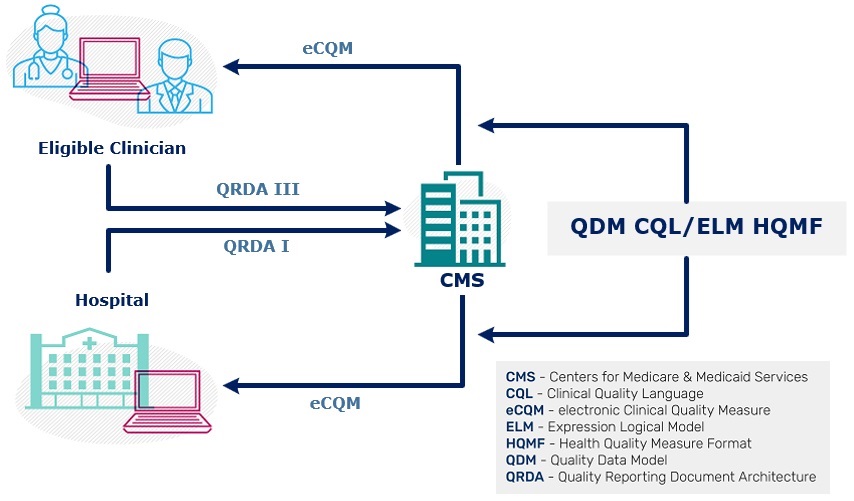
The figure to the right depicts the use and flow of the eCQM transmission standards.